SAP SuccessFactors Recruiting is the ATS you encounter at large multinational corporations, particularly those in manufacturing, automotive, pharmaceuticals, energy, and professional services. These are companies that already run SAP for their core business operations (finance, supply chain, inventory) and chose SuccessFactors because it integrates tightly with the rest of their SAP infrastructure. For applicants, this integration has specific consequences that are not obvious from the outside.
Why it matters that SuccessFactors is part of SAP
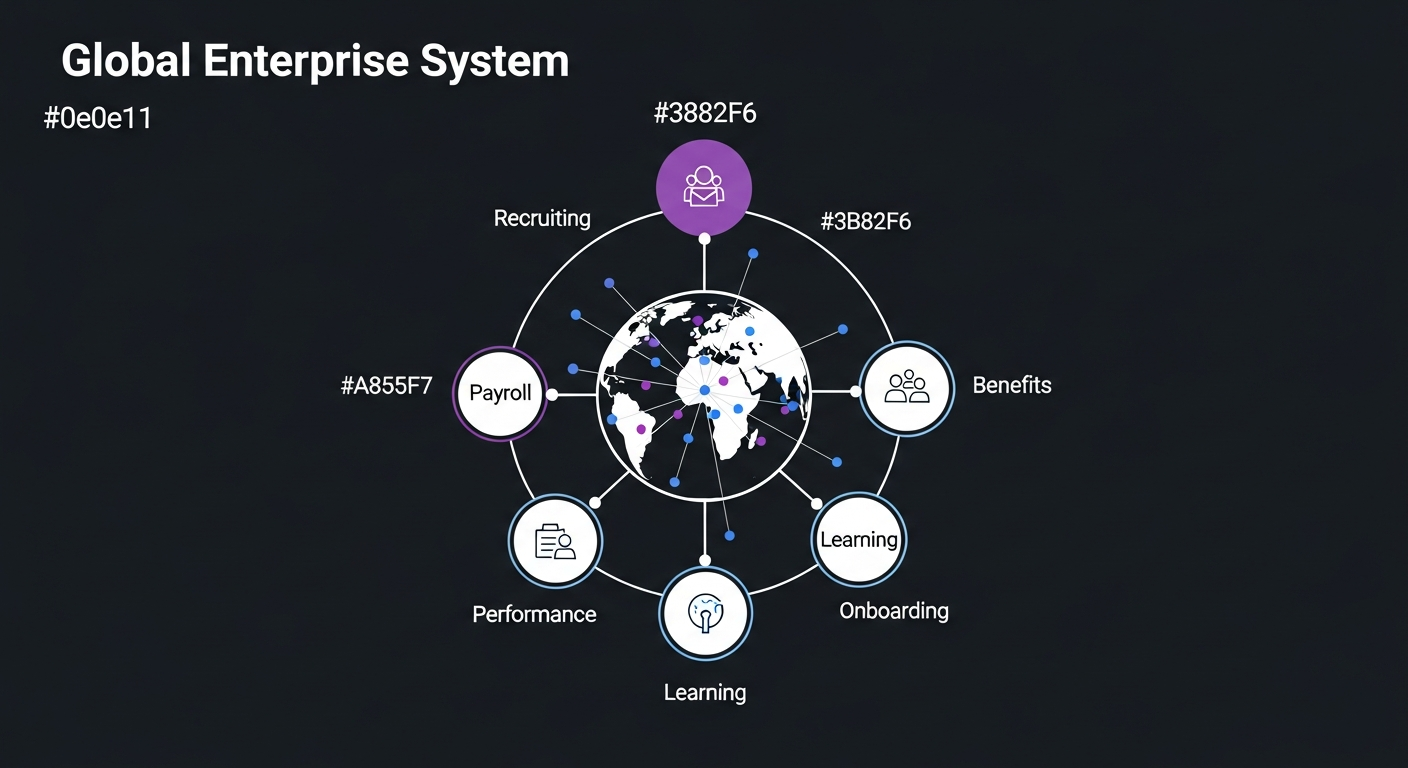
Understanding SuccessFactors requires understanding its context. SAP acquired SuccessFactors in 2012 and has been integrating it with its broader Human Capital Management (HCM) suite. For a company running SAP, SuccessFactors is not just a recruiting tool. It is the recruiting component of an end-to-end HR system that manages the entire employee lifecycle: hiring, onboarding, payroll, performance management, learning, and succession planning.
This integration means that when you apply through SuccessFactors, your data is entering a system that will eventually need to accommodate payroll codes, organizational hierarchies, cost center assignments, and position management. The application experience sometimes reflects this enterprise infrastructure in ways that feel unfamiliar compared to applying through a standalone ATS.
Position management: you are applying to a position, not just a job
Many SuccessFactors clients use a concept called "position management." In this model, every role in the company has a defined position in the organizational hierarchy, with a specific cost center, reporting relationship, and headcount approval. When you apply for a job, you are not just applying for an abstract job description. You are applying for a specific, approved position in the company's org chart.
This has practical implications. A requisition in SuccessFactors may be tied to a specific headcount approval that took weeks to secure through the company's budget process. This can make hiring timelines longer but also means the position is genuinely funded and approved. Companies using position management are less likely to post "exploratory" job listings that do not correspond to a real, funded opening.
What this looks like for applicants
You may notice that SuccessFactors job postings include organizational details that other ATS job listings do not: specific department names, cost center information, reporting structure references, or location codes. These are artifacts of the position management system showing through. They can actually be useful to you, providing more context about where the role sits in the organization than a typical job posting offers.
Multi-country hiring and localized applications
One area where SuccessFactors genuinely differs from most ATS platforms is its handling of multi-country hiring. A global company using SuccessFactors may post the same role in multiple countries, each with country-specific application forms, compliance requirements, and legal disclosures. The system manages this complexity at the platform level.
As an applicant, you might notice that a SuccessFactors application form includes questions specific to the country where the job is located: right-to-work verification formatted for that country's laws, data privacy consent in the local language, or industry-specific disclosures required by local regulations. The form you see in Germany for the same role may differ substantially from the one in the United States, not because the company chose different questions, but because SuccessFactors automatically applies country-specific compliance requirements.
Resume parsing and candidate matching
SuccessFactors parses uploaded resumes and extracts structured data. The parsing is on par with other enterprise systems: reliable for standard formats, less effective with complex layouts. Parsed data populates a candidate profile that recruiters use for evaluation.
The matching system in SuccessFactors uses a combination of keyword matching and competency alignment. Recruiters define required and preferred qualifications when creating a requisition, and the system scores candidates against these criteria. SuccessFactors has been adding AI-assisted matching capabilities, but the level of AI sophistication depends on which modules the company has licensed and configured.
A notable feature: SuccessFactors has a competency library that companies can use to standardize job requirements across the organization. When a competency like "strategic thinking" or "data analysis" is defined in the library, it comes with a description and proficiency levels. If the company uses these standardized competencies in their job requisitions, the matching engine can evaluate candidates more consistently across different roles and departments.
Internal mobility and what it means for external applicants
SuccessFactors includes an internal mobility module that allows current employees to apply for open positions within the company. At many SuccessFactors clients, job postings are first made available internally for a defined period before being opened to external candidates. Some positions are posted both internally and externally simultaneously.
For external applicants, this means you may be competing against internal candidates who already have detailed performance records, competency assessments, and manager endorsements in the system. Internal candidates have a richer profile in SuccessFactors than any external applicant can create through a resume upload. This does not make it impossible for external candidates to get hired, but at companies that prioritize internal mobility (and many SuccessFactors clients do), it is a factor worth being aware of.
The application experience at a typical SuccessFactors company
A standard SuccessFactors application flow involves finding the position on the company's career site, creating a candidate profile (or logging in if you have applied before), uploading your resume, completing any required fields that the parser did not fill, answering screening questions, and submitting. The process is similar to Workday or iCIMS in its general structure, though the interface design is different.
SuccessFactors career sites have been modernized in recent years, but some companies still run older versions with a more dated interface. The experience can vary significantly between companies depending on which version of the career site module they have deployed and how much they have customized it.
How to identify a SuccessFactors career site
- The URL often contains
successfactors.com,jobs.sap.com(for SAP's own careers), or subdomain patterns likecareer[x].[company].com. - The interface typically has a search bar with filters for location, job category, and keywords. Newer versions have a more modern look with card-based job listings.
- The application form requires creating a candidate account and may prompt you to connect via LinkedIn for profile import.
- Page source often contains references to "successfactors" or "SAP" in script paths and API endpoints.
How Ajusta handles SuccessFactors job postings
When Ajusta identifies a SuccessFactors job posting, it accounts for the system's competency-based evaluation approach. If the job description includes specific competencies or detailed qualifications (which SuccessFactors postings often do, especially for positions linked to the company's competency library), Ajusta maps your resume content against these competencies rather than just performing keyword matching.
Ajusta also factors in the multi-country dimension. For positions in specific countries, it considers local resume conventions and qualification formats that may differ from North American norms. A resume optimized for a SuccessFactors posting in Germany needs different emphasis than one for the same company's US office.
Frequently asked questions
Is SAP SuccessFactors the same as SAP's other recruiting tools?
SAP has had multiple recruiting products over the years. SuccessFactors Recruiting is the current, cloud-based product. Older products like SAP E-Recruiting (which ran on-premise) have been largely deprecated in favor of SuccessFactors. If you encounter a career site that feels particularly dated at an SAP-running company, it may be an older SAP recruiting product rather than SuccessFactors.
Does SuccessFactors share my data across different companies?
No. Each company using SuccessFactors has its own separate instance. Your candidate profile and application data at one company are not visible to another company, even if both use SuccessFactors. You need to create separate accounts and submit separate applications for each company.
Why are some SuccessFactors applications so detailed?
Companies using SuccessFactors often operate in regulated industries or multiple countries, both of which require extensive data collection. The position management system may also require specific information to match candidates against defined organizational roles. The detail reflects the company's compliance and organizational requirements, not arbitrary system defaults.
Can internal candidates see my application at a SuccessFactors company?
No. Internal candidates can see job postings and apply through the internal mobility portal, but they cannot see external applicant data. Only recruiters and hiring managers with appropriate access can view candidate information. The internal and external application pools are managed separately, even though both feed into the same hiring workflow.
Does applying through LinkedIn make a difference on SuccessFactors?
SuccessFactors supports LinkedIn Apply integration, which lets you import your LinkedIn profile data to populate the application form. This saves time but has the same trade-offs as with other ATS platforms: your LinkedIn profile may not be as targeted as a tailored resume for the specific role. The data is processed through the same parsing and matching engine regardless of whether it came from LinkedIn or a direct resume upload.